Are First Time Home Buyers Missing Out?

A recent survey shows that those buying their first home are making up a smaller percentage of home buyers. From US News:

The Campbell/Inside Mortgage Finance HousingPulse Tracking Survey, released last week, found that first-time home buyers were purchasing only 34.7 percent of the homes sold in October. That’s down from 37.1 percent in September, and is the lowest percentage ever recorded by the survey.

This decline surfaces as purchases of non-distressed homes—houses that are not in foreclosure—have increased dramatically in 2012. The report shows that the vast majority of the homes being sold are regular purchases—accounting for 64.7 percent of all houses sold in October, up from 55.7 percent in February. The increase is a sign of strength in the housing market, as fewer people are buying homes in foreclosure.

The article continues to speculate that part of the reason why first time home buyers are not participating as much as other buyers is partly due to tightening underwriting guidelines. If someone has been considering buying their first home, I highly recommend they get started with the pre-approval process early. 

Lenders want to avoid another mortgage meltdown and want to make sure that borrowers qualify for the new mortgage. That might sound like a silly or obvious comment, however during the “subprime era” many home buyers did not qualify for the mortgage. Ultimately, underwriting guidelines are intended to measure a borrowers capability to repay the mortgage and to not have the home become a “distressed property”. 

Underwriters are looking for a borrowers financial strengths and weaknesses when reviewing an application for a mortgage. In an article I wrote a few years ago, I compared this to a chair with each leg of a chair representing a financial quality that underwriters consider: credit, employment, income and assets.

First time home buyers don’t need to be discouraged, they do need to be prepared. Mortgage rates are extremely low making this a great opportunity to buy if one wants to.

I’ll share some tips on what first time home buyers can do in a follow-up post.

Stay tuned!

Seattle PI reports Surging Home Prices in King County

This week Aubrey Cohen from the Seattle PI reported that sales prices in King Count jumped up just shy of 20% last month:

The median price of a King County house that sold in November was $385,000, up 19.7 percent from a year earlier and 4.1 percent from this October, the Northwest Multiple Listing Service reported Wednesday. The median price in Seattle was $425,000, up 18.1 percent from last November and 1.2 from October.

Some non-distressed homes continue to experience bidding wars as inventory remains low. Here are some tips on what you can do to prepare for a “bidding war”.

Experts speculate that part of the jump in sales price could be from home buyers taking advantage of extremely low mortgage rates to buy a higher priced home.

If you are interested in buying a home, whether it’s your primary home, a vacation home or an investment property, I strongly recommend getting preapproved first. Being preapproved will help give you an advantage over unprepared buyers. 

If you are considering buying a home anywhere in Washington, I’m happy to help you with your mortgage needs. I have helping people buy and refinance homes in Washington at Mortgage Master Service Corporation since April 2000.

HUD extends FHA’s Flipping Waiver through 2014

HUD recently announced they will extend the “anit-flip waiver” through December 2014. Without this waiver, home buyers would not be able to use FHA financing for homes that are considered being “a flip” ( a property that is quickly resold at a much higher price).

From the Federal Register:

Prior to the waiver, a mortgage was not eligible for FHA insurance if the contract of sale for the purchase of the property that secured the mortgage was executed within 90 days of the prior acquisition by the seller, and the seller did not come under any of the exemptions to this 90-day period specified in the regulation.

Through the regulatory waiver, FHA encourages investors that specialize in acquiring and renovating properties to renovate foreclosed and abandoned homes, with the objective of increasing the availability of affordable homes for first-time and other purchasers, helping to stabilize real estate prices as well as neighborhoods and communities where foreclosure activity has been high. The waiver is applicable to all single family properties being resold within the 90-day period after prior acquisition, and is not limited to foreclosed properties. Additionally, the waiver is subject to certain conditions, and mortgages must meet these conditions to be eligible for the waiver.

The Waiver continues to be limited to sales meeting the following conditions:

  • All transactions must be arms-length, with no identity of interest between the buyer and seller or other parties participating in the sales transaction.
  • In cases in which the sales price of the property is 20 percent or more above the seller’s acquisition cost, the Waiver will only apply if the lender meets specific conditions and documents the justification for the increase in value.
  • Seller must be by the owner of record
  • Property may not have been a repeatedly “flipped” over the past year
  • Property was marketed openly and fairly
  • The Waiver is limited to forward mortgages, and does not apply to the Home Equity Conversion Mortgage (HECM) for purchase program. [Reverse Mortgages]

When a home is being resold 20% or higher than what the seller purchased the property for in less than 90 days, often times a second appraisal will be required and the seller will need to show documentation to support the increased value in the home, such as receipts for the improvements made. A property inspection report will also be required by the lender to assure the quality of the improvements made to the property. Any health or safety issues disclosed by the property inspection will need to be corrected.

If a home has been re-sold withing 91-180 days at more at 100% or more than the seller’s acquisition cost, the same conditions will apply.

NOTE: If a second appraisal is required, the home buyer is not allowed to pay for it per HUD. And you can pretty much count on that second appraisal being required. Thanks to LO Comp being passed by the Fed in 2010, your friendly mortgage professional is not allowed to pay for the appraisal either.  

Investors (aka Flippers) who are reselling in a short period of time for a much higher amount than their acquisition cost should be prepared for the cost of the second appraisal when the buyer is using a FHA mortgage for financing. They should also retain detailed records of improvements (including all receipts) when they’re planning to quickly resale a home. The seller’s acquisition cost is the sales price of the home, plus the seller’s closing cost, including real estate commissions. It does not include any repairs. 

If you are considering buying a home located anywhere in Washington State, I’m happy to help you! Click here for a mortgage rate quote for homes located anywhere in Washington.  I’ve been originating home loans at Mortgage Master Service Corporation since April 2000, including FHA insured loans.

Should I refinance my car before buying a home?

Short answer: probably not.

Why? The refinance of the car will impact your credit score as if you have purchased a new car. Credit scoring favors established older debt over new debt. Once you have that new loan, even if the payment is lower and interest rate is lower, the established old debt is paid off and eventually loses the positive impact to your credit scores.

[Read more…]

How can a preapproval change?

MortgageWhen someone becomes “preapproved” for a mortgage, it boils down to they qualify for a certain mortgage payment based on their income and debts (DTI aka debt to income ratio).  A home buyer qualifies for the loan amount of the new mortgage and their funds available for down payment and closing cost determine the sales price.

[Read more…]

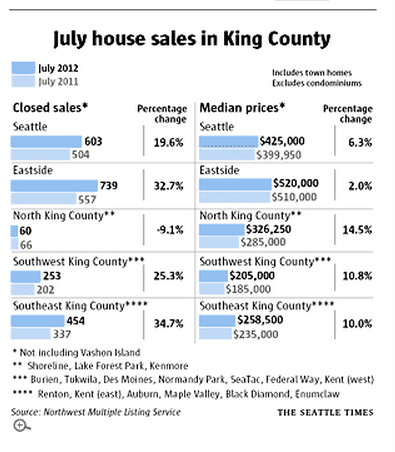
King County Home Prices are up 7% from last year

The Seattle Times reports that home prices for King County have jumped up 7.2% from July last year. This pencils out to $25,250 with the median sales price of $375,250. The article also notes that closings are up 26% YOY which is great news for the housing industry. It doesn’t matter how low mortgage rates or home prices are unless transactions can actually close.With less inventory, many buyers are finding themselves in bidding wars or having a property in contract before they can get their offer together. From the article:

“Another recurring theme is the dramatic drop in the number of homes for sale. Home listings have been sliding for a full year; in July the number of home listed for sale was down 38 percent year-over-year…

…distressed home listings — bank-owned properties and short sales — are down 60 percent from last year. This also contributes to the small number of listings and brings up home prices.”

Part of the reason for the low inventory, per Seattle real estate economist Matthew Gardner, is that many people are not able to sell because they are underwater with their mortgages and don’t want to go through a short sale.

If you’re considering selling and your property is non-distressed (you have enough equity to sell), this could be a great time with more buyers than sellers.

If you’re underwater with your home and would like to sell once you have equity, you might consider a HARP 2.0 refinance (if your last conforming mortgage closed prior to June 2009) or an FHA streamlined refi (if your existing mortgage is FHA). While you wait for home values to continue to trend higher, why not save on your monthly mortgage payments?

If you’re a home buyer, I cannot stress enough how important it is to be fully preapproved BEFORE you start shopping for a home. If you’re considering buying or refinancing a home in Seattle, King County or anywhere in Washington state, I’m happy to help you!

Survey Says!

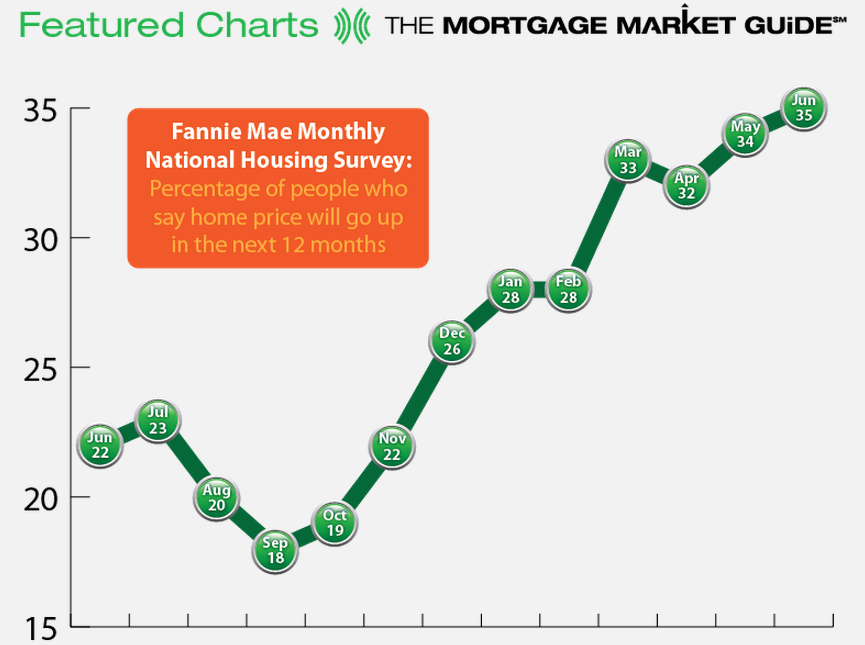
According to Fannie Mae’s Monthly National Housing Survey, many Americans believe that home prices are on the rise. If you are shopping for a home in the Seattle area, you probably know this to be true and may have experienced a bidding war or two.   

Housing_Survey
 

If you are considering taking advantage of today’s very low mortgage rates and home prices, it’s crucial that you get preapproved by a qualified local mortgage originator.

A preapproval means that you have provided your supporting income and asset documents to prove you have the ability to purchase the home. If you have not provided income and asset documents to your lender, you are most likely not “preapproved” and may only be “prequalified”.  

I’m happy to assist with the financing of your home located anywhere in Washington state.  It all starts with a review of your financial scenario – click here to start the application process.

More Listing Agents Performing “Sniff Test” on Mortgage Originators

IStock_000019730096XSmallI’m noticing that more listing agents are performing, what I like to call, “sniff test” to check out the lender who has prepared the preapproval letter. By the way, I think this is an excellent idea. This is especially true if the listing agent is reviewing multiple offers, which is happening more in the greater Seattle area with non-distressed homes that are desirable and priced right.

The sniff test is typically a phone call by the listing agent so they can get an idea about the mortgage originator. The listing agent should not ask personal information about the potential home buyer (such as credit scores or available funds). 

When a listing agent contacts me, I know they’re sizing up:


  • how quickly I returned their phone call or email
  • how experienced I am at closing my clients specific mortgage program (for example, Fannie Mae Homepath, Freddie Mac Homesteps or FHA transactions)
  • how long I’ve been in the mortgage industry (over 12 years at Mortgage Master Service Corporation)
  • how quickly we can close by
  • to learn more about our company (family owned and operated since 1976)

I’ve heard from many local real estate agents that they need to make sure the loan can actually close. Often times, a preapproval letter may not be worth more than the paper it’s written on if the mortgage originator has not done their homework with the actual preapproval.  NOTE: you are NOT preapproved unless you have provided your mortgage originator your income and asset documentation. 

I wrote about “investigating your preapproval letter” many years ago at Rain City Guide. The issue with preapproval letters then was probably that anybody and their brother was a mortgage originator back in 2007. Now there are far less mortgage originators however, if the mortgage originator works at a bank or credit union, they may still lack experience (they’re not required to be licensed). A licensed mortgage originator may be new to the industry as well. Some large internet mortgage companies have been hiring LO’s who can pass the national exam but still lack experience. There’s a big difference between being a good a passing exams and successfully closing loans.

While the number of mortgage originators is dramatically down, it’s still important to make sure your mortgage originator has the capability to see your transaction to closing. It may be a consideration to make sure your mortgage originator can pass a sniff test.