FHA Mortgage Insurance set to increase April 2012

Yesterday, HUD announced they are going to increase the annual (paid monthly) and upfront mortgage insurance premium on FHA insured mortgages effective on new case numbers obtained April 1, 2012 April 9, 2012 and later.

As of today, the upfront mortgage insurance premium for FHA insured mortgages is 1% of the loan amount. Most borrowers elect to finance this into their FHA loan although it can be paid for as a closing cost instead of including it in the loan amount.  HUD will be increasing the upfront mortgage insurance premium from 1% to 1.75% on April 1, 2012 April 9, 2012.

FHA's annual mortgage insurance (paid monthly) is set to increase by 0.10% for standard FHA loan amounts and will increase an additional 0.35% for "FHA Jumbos will take place on June 1. The additional 0.10% increase is due to "The Temporary Payroll Tax Cut Continuation Act of 2011. HUD has elected to tack the additional 0.25% on the larger loan amounts.

In the greater Seattle area, FHA base loan amounts of $417,000 or lower will see the annual mortgage insurance increase by 0.10%.  Seattle's current high balance (or FHA jumbo) impacts loan amounts of $417,001 to $567,500 and these loans will have increased annual mortgage insurance premiums by 0.35%.

How does this impact an FHA borrower?

Today a Seattle area homebuyer using an FHA insured mortgage at $417,000 with a minimum down payment of 3.5% and excellent credit would have a PIMI principal, interest and mortgage insurance) of $2,346.78 based on a 30 year fixed with a rate of 3.750% (apr 4.544). Effective April 1, this scenario will have a PIMI of $2,395.73 assuming the same rate (apr 4.665).  An increase in total monthly mortgage payment of $48.95 for the same scenario!

Currently a Seattle homebuyer using an FHA mortgage at $567,500 with a minimum down payment of 3.5% and excellent credit would have a PIMI (principal, interest and mortgage insurance) payment of $3,193.76 based on current rates of 3.750% for 30 year fixed rate (apr 4.541). Effective June 1, this high balance FHA loan, assuming the same rate (apr 4.817), the payment increases to $3,377.61! An increase in total monthly mortgage payment of $183.85 for the very same scenario!

NOTE: Rates quoted above are effective as of 2/28/2012 at 4:00 pm. If you would like me to provide you with a mortgage rate quote for your home located in Washington, click here.

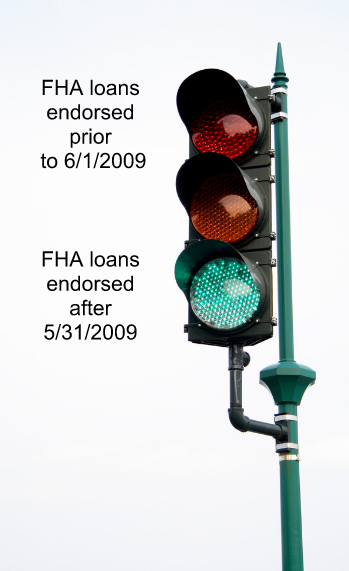
If you are considering an FHA insured mortgage, whether it's for purchasing a home, FHA streamlined refinance or other refinance, you'll want to take action before the increased rates take effect. FHA case numbers are issued when you have a bona fide loan application (transaction) with a mortgage originator. I'm happy to help you if your home is located anywhere in Washington state.  UPDATE 3/6/2012: If your FHA mortgage was originated prior to June 1, 2009, you may qualifed for reduced FHA mortgage insurance.

If you would like a rate quote for an FHA mortgage on a home located in Washington, click here.

An official Mortgagee Letter is expected to follow soon. Don't wait!

Click here for FHA Loan Limits in Washington 

UPDATE 3/6/2012: It's official: Here's information about HUD's Mortgagee Letter.

Private Mortgage Insurance Options

Private mortgage insurance is what lenders may require when a borrower has less than 20% equity in a property. Private mortgage insurance (pmi) protects the lender against default, it does not protect the property owner. 

Private mortgage insurance (pmi) is often something that borrowers do their best to avoid because of the additional cost. However if the 20% down payment (or 15% down payment with a “piggy back” second mortgage) is not possible, a home buyers or home owner who is refinance may opt for pmi or an FHA insured mortgage. Over the past couple years, FHA insured mortgages have become more costly to the point where if a borrower can qualify with pmi, it is probably a more cost effective option. Private mortgage insurance is not only for home purchases, refinances may benefit from pmi considering how low mortgage rates are at the moment.

Many are aware of private mortgage insurance premiums being paid as part of their monthly mortgage payment, however I find that Seattle area home buyers often do not know about the “split premium” option which dramatically reduces the amount paid in a monthly premium.

Let’s compare scenarios based on a sales price of $444,500 with 10% down payment with excellent credit scores of 740 or higher and debt-to-income ratios under 45%.

  • The traditional pmi with the borrower paying monthly in their mortgage payment would be approximately $160 per month (0.48% of the loan amount/12). 
  • A borrower could also opt to pay for the mortgage insurance premium in one lump sum (single premium) and not have it included in their mortgage payment.  Based on this scenario, the cost would be $4,680 (1.17% of the loan amount). A seller can pay for this closing cost or a lender can use rebate pricing to help pay this cost.
  • Another option is the split premium borrower paid mortgage insurance. Similar to an FHA loan, there is an upfront mortgage insurance premium and a reduced monthly mortgage insurance premium. The amount of the upfront premium can vary and the lower it is, the higher the monthly premium will be (and vice versa). For this scenario, if we assume an upfront premium of 1% or $4000, the monthly premium would only be $43.33 (0.13% of the loan amount/12). Just as with the single premium option, the upfront premium may be paid for by the seller as a closing cost or with rebate pricing

Private mortgage insurance has risk based pricing that factoring various charactors of the borrowers such as:

  • credit score
  • loan to value
  • program type and term of mortgage
  • occupancy
  • self employed
  • previous bankruptcy
  • location of property

If you have less than 20% down payment saved up to buy your next home or are considering refinancing anywhere in Washington, I’m happy to help.  I’ve been originating mortgages at Mortgage Master Service Corporation for the past 12 years and have been licensed since 2007. If you would you like a FREE rate quote for a home located in Seattle, Redmond, Bellingham or beyond, click here.

Private Mortgage Insurance Saves the Day for Refi’s with Low Appraisals

Recently a couple of my clients returned to me to refinance their Washington homes wanting to take advantage of the current historically low mortgage rates. The biggest gamble with a refinance is what the appraised value comes in at. We know at the beginning of the application if someone is qualified based on their income and what their credit scores are. We wait to until we receive the appraisal to learn what has been decided to be a current value based on what other like homes in the neighborhood have recently sold for.  If a home's loan to value is over 80% based on the the appraised value, the home owner has options depending on what the actual loan to value is. 

Private mortgage insurance has varying rates depending on risk factors, such as credit score, appraised value, loan program and income. The premium can be paid monthly, annually, by the lender (lpmi), single premium (paid once) or split premiums (a combination of monthly and a lump sum premium). If paid monthly, private mortgage insurance is set to be dropped from ones mortgage payment when the principal balance reaches 78% loan to value based on the original transaction.

Here's an example. A couple from Ballard want to refinance their mortgage with a total loan amount of $400,000 with no cash out (rate-term refi).  They have excellent credit scores (above 740) and have locked in a 30 year fixed at 3.875% (apr 3.978) with a principal and interest payment of $1881.  Mr and Mrs. Ballard would like the appraisal to come in at $500,000 or higher to meet the 80% loan to value criteria. Based on what their neighbors have sold their homes for recently (6-9 months) the appraisal comes in at $480,000 producing an 83.3% loan to value. It's disappointing at first however Mr. and Mrs. Ballard and ready to review what their possible options are. 

Bring in cash to make up the difference. $480,000 appraised value x 80% LTV = $384,000 possible loan amount with no mortgage insurance.  $400,000 proposed loan less $384,000 = roughly $16,000.  NOTE: this figure could probably be reduced with the use of rebate pricing (increasing the rate to reduce the cost) and other closing costs would be reduced based on the reduction of loan amount.

Add monthly private mortgage insurance. Based on their scenario, the rate would be 0.29% of the loan amount divided by 12 months = $96.67 monthly pmi. This premium will remain in their payment until the principal balance reaches 78% of the appraised value of $480,000, which should take approximately 41 months. If Mr. and Mrs. Ballard decides to go this route, their principal, interest and mortgage insurance payment will be $1978 and their initial closing cost will not be increased (apr 4.056). 

Pay a one time "single premium" mortgage insurance. Instead of increasing their monthly payment, Mr. and Mrs. Ballard can opt to pay pmi in one lump sum and be done with it!  The rate, based on their scenario, is 0.72% of the loan amount = a one time payment of $2880. This does increase their closing cost however their principal and interest payment will remain at $1881 (apr 4.039).

Mr. and Mrs. Ballard decide they like the single premium option considering that they won't have a mortgage payment due for one month after the closing of their new refinance and they're receiving a refund of the balance of their existing reserve account a few weeks after closing from their existing mortgage servicer.  Plus they'll break even with the one time mortgage insurance premium quicker than the monthly option. Both pmi options allow them to not dip into their cash reserves and to still proceed with the refinance.

In this climate, sometimes neighbors (or banks) have to sell homes for less than what they or you would like and appraisals may come in lower than expected.  It's good to know that there are options for when this happens. A piggy back second mortgage may be something to consider too with this type of scenario.

NOTE: If Mr. and Mrs. Ballard's existing mortgage qualified for a Home Affordable Refinance, there would not be any private mortgage insurance required and if their exisiting mortgage was FHA, they may have opted for a streamlined refinance without an appraisal (no potential loan to value issues) although the pmi rate is currently less expensive than FHA's mortgage insurance.

PS: For the record, appraisals may come in higher than estimated too. 

If you are interested in seeing obtaining a rate quote for a refinance or purchase on a home located anywhere in Washington, please contact me.

FHA Mortgage Insurance Increasing in April

NOTE: I originally published this article in February when HUD published the Mortgagee Letter. However with the increase to mortgage insurance on FHA insured loans just around the corner, I thought I should re-post this. If you are purchasing a home or refinanacing using an FHA insured loan, you will want to be in contract and have your loan application complete no later than April 13, 2011 to insure having an FHA Case Number issued in time.

Yesterday HUD issued Mortgagee Letter 11-10, making it official that FHA annual mortgage insurance will increase another 0.25% basis points on case numbers issued on or after April 18, 2011. The annual mortgage insurance is included in the monthly mortgage payment. There is no change (at this time) to the upfront mortgage insurance which is paid for at closing (typically financed or may be paid as a closing cost). This is in line with the Obama Administration's plan for reforming mortgages which was revealed on Friday.

HUDmip

Here's how this will pencil out for a 30 year fixed mortgage based on a sales price of $400,000 with a minimum down payment of 3.5% (base loan amount of $386,000).

FHA mortgages with a case number issued prior to April 18, 2011 (current as of this post):

386,000 x .90% = 3,474/12 months = $289.50.

FHA mortgages with a case number issued April 18, 2011 or later:

386,000 x 1.10 1.15% = 4,246 4,439/12 months = $353.83 $369.92

Difference in monthly payment: $64.33. $80.42

This will also impact FHA 203k rehab loans.

Remember, FHA annual mortgage insurance remains on the loan for a minimum of 60 payments regardless of loan to value. Even if a home buyer is putting down 20% towards the purchase of their Seattle area home, they will still have FHA mortgage insurance. FHA mortgage insurance will also remain on the home until the loan balance reaches 78% of the loan to value based on the original appraised value or purchase price of the home (which ever was less).

I have been originating FHA insured loans for the past eleven years at Mortgage Master Service Corporation (a Direct Endorsed HUD approved lender). I am licensed to originate mortgages for homes located in the State of Washington. If I can help you with your mortgage needs, please let me know!

Your Mortgage Insurance may be a 2010 Tax Deduction

Did you know that mortgage insurance premiums you paid during 2010 may be tax deductable?  This is eligible for mortgage insurance contracts that were issued after 2006 for the use of purchasing your home (primary residence or second home) and is not limited to what you may traditionally think of as "private mortgage insurance". 

Qualified mortgage insurance may include:

  • private mortgage insurance (may be paid monthly, lump sum at closing or both)
  • FHA annual mortgage insurance (paid monthly)
  • FHA upfront mortgage insurance premium (paid upfront at closing)
  • VA Funding Fee (paid upfront at closing
  • USDA Guarantee Fee (similar to a funding fee; paid upfront at closing)

Qualified mortgage insurance is reported in box 4 on your 1098 Mortgage Interest Statementwhich you should have received from your mortgage servicer (who you make your mortgage payments too).  This deduction is treated essentially the same as deductible mortgage interest.   You will need to file an itemized tax return in order to claim this deduction.  If your adjusted gross income is more than 109,000 ($54,000 if married filed separately) you cannot claim this deduction.   You can refer to Line 13 (of the Instructions for Schedule A of the 1040 (on page 7) and IRS Publication 936 more information.

Remember, please seek the advice of your tax professional or CPA.  I am licensed to originate mortgages on homes located in Washington State. 

Related post: 

Mortgage Insurance Tax Deduction Extended (again) through 2011

Are Mortgage Points Tax Deductible?

FHA Mortgage Insurance to Increase in April

Yesterday HUD issued Mortgagee Letter 11-10, making it official that FHA annual mortgage insurance will increase another 0.25% basis points on case numbers issued on or after April 18, 2011.   The annual mortgage insurance is included in the monthly mortgage payment.  There is no change (at this time) to the upfront mortgage insurance which is paid for at closing (typically financed or may be paid as a closing cost).  This is in line with the Obama Administration's plan for reforming mortgages which was revealed on Friday.

HUDmip 

Here's how this will pencil out for a 30 year fixed mortgage based on a sales price of $400,000 with a minimum down payment of 3.5% (base loan amount of $386,000).

FHA mortgages with a case number issued prior to April 18, 2011 (current as of this post):

386,000 x .90% = 3,474/12 months = $289.50.

FHA mortgages with a case number issued April 18, 2011 or later:

386,000 x 1.10% = 4,246/12 months = $353.83

Difference in monthly payment: $64.33.

This will also impact FHA 203k rehab loans.

Remember, FHA annual mortgage insurance remains on the loan for a minimum of 60 payments regardless of loan to value.  Even if a home buyer is putting down 20% towards the purchase of their Seattle area home, they will still have FHA mortgage insurance.   FHA mortgage insurance will also remain on the home until the loan balance reaches 78% of the loan to value based on the original appraised value or purchase price of the home (which ever was less).

I have been originating FHA insured loans for the past eleven years at Mortgage Master Service Corporation (a Direct Endorsed HUD approved lender).  I am licensed to originate mortgages for homes located in the State of Washington.  If I can help you with your mortgage needs, please let me know!

FHA 5/1 Adjustable Rate Mortgage

FHA ARMs are extra special in my eyes.  I like that they have very low caps limiting how much they can adjust after the fixed rate period is over.  Plus, FHA loans may be assumable to a qualified borrower in the future should you decide to sell your home.  Today's fixed rates have about a 1 point difference between a 30 year and a 5/1 ARM, but with a 1% rate cap, worse case scenario, the 5/1 ARM will reach today's 30 year fixed rate at it's first adjustment and keep that adjusted rate for one year.  Let's see how this pencils out. 

NOTE: for a current rate quote for an FHA ARM or any mortgage for a home located in Washington, click here.

As of 12:45 p.m. Feb.  2, 2011, based on a credit score of 720 with a sales price of $400,000 and a down payment of 3.5%, I would quote the following:

30 year fixed FHA with zero points: 4.750% (APR 5.497).  Principal, interest and mortgage insurance payment:  $2,321.16.  ($2033.69 plus $287.08 monthly mortgage insurance).

5/1 FHA ARM with zero points: 3.750% (APR 6.521).  Principal, interest and mortgage insurance payment: $2,082.58.  ($1805.50 plus $287.08 monthly m.i.). 

Based on this pricing, the difference in monthly savings with the ARM is $238.56.  Over five years, the savings is about $14,315. 

The FHA 5/1 ARM has caps of 1/1/5.  This means that the most this rate can adjust on the first adjustment date (after 60 months) is up or down 1%.  Using the scenario above, the highest the rate can adjust to is 4.75% and the lowest is 2.75%.  The rate will continue to adjust annually no more than 1% up or down for the remainder of the term or as long as the mortgage is retained.  The highest the rate can ever be 5% higher than the note rate (this is called the "ceiling").  With this scenario, that would be 8.750%; however it would take 5 years (after the five year fixed period is over) for the rate to adjust that high. 

Here's what the principal, interest and mortgage insurance (PIMI) would look like "worst case" scenario assuming your first payment is made today and the rate only adjusts upwards:

PIMI Payments from 2/1/11 – 1/1/16 at $2,082.58 at 3.750%.  (Rate fixed for 5 years).

PIMI Payments from 2/1/16 – 1/1/17 at $2,259.96 at 4.750%.  (Maximum increase in rate of 1%).

PIMI Payments from 2/1/17 – 1/1/18 at $2,454.06 at 5.750%. 

PIMI Payments from 2/1/18 – 1/1/19 at $2,650.82 at 6.750%.

PIMI Payment from 2/1/19 – 1/1/20 at $2,849.23 at 7.750%. 

MI Payment (see NOTE below) from 2/1/2020 to 1/1/2021 at $2,818.20 at 8.750% $310,638.

The rate will continue to adjust annually (on the anniversary date of the first adjustment) and will be reamortized based on the remaining term. The rate can adjust by as little as 0.125% but never more than by 1% up or down and never higher than 5% of the Note rate.

NOTE:  FHA monthly mortgage insurance drops off after the loan balance reaches 78% of the value (based on the original value of $400,000 = $312,000) and a minimum of 60 payments have been made.  Assuming all payments are made as scheduled, the home owner will reach 78% around 108 payments (9 years) with the adjustable rate mortgage.   With the 30 year fixed rate, it will actually take closer to 120 months (10 years) to reach the 78% threshold before the monthly mortgage insurance drops from the payment.  Additional payments can be made towards principal but the earliest the mi will be removed regardless of loan to value is 60 months.

The scenarios above are assuming that we finance the upfront mortgage insurance premium of 1%.  Another option is for the 1% to not be financed and paid as a closing cost…even the seller can pay for the upfront mortgage insurance premium.  At this point, Sellers can still contribute up to 6% of the sales price towards closing costs and prepaids; they cannot pay any of the down payment.  

Although my quote was based on a 720 mid-credit score.  We're currently approving FHA loans with low mid-credit scores down to 640.

The loan limits for FHA loans in King, Pierce and Snohomish County is currently $567,500 (until October 1, 2011).   

Is an adjustable rate mortgage right for you?  It depends on your personal scenario is and if you can stomach having your rate change.  The 1/1/5 caps are certainly more tolerable than the 5/2/5 caps that most conventional ARMS tend ot have.  At any rate, it's good to know what your mortgage options are.

If you are considering buying or refinancing a home located in Washington state, I'm happy to help you!

Mortgage Insurance Tax Deduction Extended (again) through 2011

Late last month, President Obama extended the tax deduction for mortgage insurance that was set to expire 2010 through 2011.  Mortgage insurance is required when a mortgage has a loan to value of 80% or higher (or less than 20% home equity).  A majority of mortgages have mortgage insurance either with a conventional mortgage (private mortgage insurance) or with an FHA insured mortgage.

Qualified borrowers with adjusted gross incomes of up to $109,000 if married and filing jointly or up to $54,500 for single filers, may be able to deduct the mortgage insurance premiums they paid during 2011.  If the mortgage insurance is financed (as in VA funding fees, USDA guarantee fees), it may be deducted over a period of 84 months.  This mortgage insurance deduction is available for mortgages closed for purposes of January 1, 2007 through December 31, 2011 that qualify as an "home aquistion debt".

You must file an itemized 1040 to claim this deduction and your mortgage insurance premium should be reported on Form 1098you receive from your mortgage servicer.

Here is a link to IRS referencing the 2010 information.

Remember, I am licensed to originate mortgages for homes located in Washington State, including Seattle, Bellevue, Tacoma and Everett.  For more information about this (or any) income tax matters, please contact your CPA or professional tax adviser.

Related Post:

Private Mortgage Insurance Extended through 2010