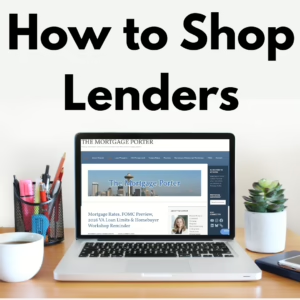
 Choosing a mortgage lender is one of the most important decisions you’ll make in the home buying process — yet most people spend more time researching a refrigerator than they do selecting who will handle the largest financial transaction of their lives. Here’s how to shop lenders the right way, including questions that will quickly reveal whether you’re talking to a true mortgage professional.
Questions to Ask Before Choosing a Mortgage Lender
What are mortgage rates based on?
The correct answer is mortgage-backed securities (MBS) or mortgage bonds — not the 10-year Treasury note and not the Fed Funds Rate. A lender who doesn’t know this is a red flag.
What is the next economic report or event that could cause interest rate movement?
A knowledgeable loan officer tracks the economic calendar and can tell you what’s coming. I publish a weekly mortgage rate update for my clients and real estate partners specifically for this reason.
When the Fed “changes rates” — what does that actually mean for mortgage rates?
The Fed Funds Rate does not directly impact mortgage rates. It affects rates tied to the Prime Rate — credit cards, auto loans, and HELOCs. Mortgage rates are bond-based and often move in the opposite direction of the Fed. Many consumers (and some loan officers) get this wrong.
What happens if mortgage rates improve after my rate is locked?
A good lender can renegotiate your rate lock if markets improve significantly after locking. Ask upfront whether this is an option and what conditions apply.
How will you help me get my offer accepted?
The lender’s role doesn’t end at preapproval. A strong lender works closely with your buyer’s agent, provides a fully underwritten preapproval (not just a prequalification), and can communicate effectively with the listing agent to strengthen your offer. Local lenders with local underwriting consistently outperform out-of-state internet lenders in competitive markets.
How often will I hear from you after my offer is accepted?
Communication during the transaction matters enormously. You should hear from your loan officer at least weekly — and they should be personally reachable, not just handing you off to a processor. My commitment: if we haven’t connected during the week, you’ll hear from me on Friday with a status update even if it’s just “everything is on track for closing — have a great weekend.”
Will my mortgage be sold after closing?
Many mortgages are sold and transferred multiple times after closing, which means your payment goes to a new servicer you never chose. New American Funding retains a majority of the mortgages we originate and continues servicing them — so you’re likely to stay with the same team that helped you close.
How long have you been originating mortgages?
Experience matters in mortgage — guidelines are complex, scenarios vary widely, and problems arise that require someone who has seen them before. You can verify a loan officer’s history and licensing at NMLS Consumer Access. I’ve been originating mortgages since 2000, and prior to that managed an escrow office — so I’ve been at the signing table from both sides.
How to Compare Rates Accurately
Rate shopping is worth doing — but only if you do it correctly. Here’s how to make sure you’re comparing apples to apples:
- Get quotes on the same day, at the same time. Mortgage rates move constantly — sometimes several times a day. A quote from Monday morning and one from Tuesday afternoon are not comparable. Schedule your rate calls within the same hour if possible.
- Don’t factor in prepaids or reserves when comparing costs. Property taxes, homeowner’s insurance, and prepaid interest are not closing costs controlled by the lender — they’ll be the same regardless of who you use. Focus on lender fees and discount points.
- Compare net closing cost alongside the interest rate. Your net closing cost is discount points plus closing costs, or closing costs minus any rebate credit. A lower rate often comes with higher points — look at the full picture.
- Compare the same lock period. A 30-day lock and a 60-day lock are priced differently. Make sure you’re comparing quotes with the same lock period appropriate for your transaction timeline.
- Provide complete information. An accurate rate quote requires your credit score range, loan amount, down payment, property type, and intended use. Incomplete information produces an incomplete quote.
Watch: How to Shop Mortgage Lenders
This short video covers the key questions to ask and what to watch for when comparing lenders:
Ready to talk to a lender who can answer all of these questions?
I’ve been helping Washington State buyers and homeowners navigate the mortgage process since 2000. No pressure, no jargon — just straightforward answers and a commitment to keeping you informed every step of the way.
Last updated 2026
 About Rhonda Porter




Speak Your Mind