 Homes in the greater Seattle – King County area have been experiencing higher home values. The demand for homes with the strong employment market in Seattle and lack of inventory has been pushing home prices higher and higher. What is not great news for home buyers wanting to live in the greater Seattle area, this does create an opportunity for homeowners. Homeowners can either sell their home to take advantage of the appreciate that we currently have, or they can consider a cash out refinance. The reasons for a cash out refinance can vary from wanting to consolidate debts, funding retirement, cashing out an ex-spouse or improving your home…just to name a few. [Read more…]
Refinancing isn’t just about lowering your rate — it’s about improving your overall financial strategy.
In this section, you’ll find educational resources explaining when refinancing makes sense, when it doesn’t, and how to evaluate your break-even point. Whether you’re considering a rate-and-term refinance, cash-out refinance, HELOC, renovation mortgage, or reverse mortgage, understanding the numbers and long-term impact is critical.
Topics covered include:
- “Should I refinance?” scenarios
- Cash-out strategies for remodeling or debt consolidation
- Home equity planning
- Recasting and re-amortization
- Renovation loans and ADU financing
- Refinancing with a second mortgage
My approach is always low-pressure and analytical — we look at the math, your goals, and your timeline before making any decisions.
If you’re a homeowner in Washington State wondering whether refinancing could improve your situation, start here.
Cash Out Refinance
January 27, 2017 by Leave a Comment
Appraisals waived for some refinances!
December 5, 2016 by 2 Comments
 Please visit our updated Refinance Guide for Homes in Washington.
In order to be eligible for to have an appraisal waived, Fannie Mae’s automated underwriting system, Desktop Underwriter (specifically version DU 10) must determine the property qualifies. This process takes place once the lender has an application and has ran it through Desktop Underwriter.
Refinance transactions that are eligible to have an appraisal waived include: [Read more…]
Steps in the Mortgage Process when you are Refinancing a Home (Updated for 2026)
November 10, 2015 by 19 Comments
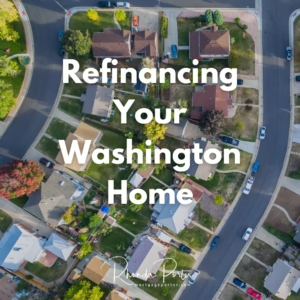
Steps in the Mortgage Process When You Are Refinancing a Home (Updated for 2026)
Refinancing your home mortgage can be a powerful financial move — whether your goal is a lower interest rate, shorter loan term, cash-out for home improvements, or debt consolidation. In today’s market, many homeowners are refinancing to lock in savings or access equity they built over years of ownership.
Here’s a clear, step-by-step guide to the refinance process, what to expect, and how to prepare for a smooth experience. [Read more…]
Delayed Financing: How Cash Buyers Can Access Equity After Paying Cash (Updated for 2026)
February 26, 2015 by 2 Comments
 Editors Note: This article on Delayed Financing has been updated for 2026.
Many homebuyers choose to pay cash to win a competitive offer or simplify the purchase process. But after closing, a common question comes up:
“Now that I own the home outright, how can I access some of that equity?”
That’s where delayed financing comes in.
Delayed financing allows buyers who purchased a home with cash to take out a mortgage shortly after closing — without waiting the typical 12-month seasoning period required for a cash-out refinance.
This strategy can be especially useful for buyers who want liquidity, flexibility, or the ability to reinvest funds after a cash purchase. [Read more…]
Where do I start with an FHA 203k Rehab loan?
August 7, 2014 by Leave a Comment
 A Step-by-Step Guide for Washington Homebuyers (Updated for 2026)
If you’ve found a home that needs work — outdated kitchen, worn roof, cosmetic issues, or more significant repairs — you may be wondering:
“Can I finance the purchase and the renovation together?”
In many cases, the answer is yes — through an FHA 203(k) rehabilitation loan, a program insured by the Federal Housing Administration.
An FHA 203(k) loan allows you to purchase (or refinance) a home and finance eligible repairs into one mortgage.
But where do you actually start?
Here’s a clear, practical breakdown. [Read more…]